EMDR moved from a niche trauma treatment to a widely used approach that many people now ask for by name. In recent years, a new format has emerged alongside weekly sessions: the EMDR intensive. Instead of spreading work across months, you schedule longer blocks of time across a few days to target specific memories and symptoms. For some clients, it feels like getting traction after years of sporadic progress. For others, it is not the right fit. The format itself is not a magic fix, just a different way to deliver a method that already works.
As a therapist who has offered both traditional trauma therapy and intensives, I see three themes behind the decision. First, timing and life pressures. When symptoms disrupt work, parenting, or sleep, waiting months to feel relief can feel like an eternity. Second, readiness. Some clients reach a point where they want to lean in while motivation is high. Third, the nature of the problem. A single-incident trauma often responds quickly in an intensive, while chronic developmental trauma may need a slower weave over time. The best choice depends on your history, resources, and goals.
What an EMDR intensive actually looks like
An intensive is not a marathon of nonstop processing. The day is structured with care. A common format is two to three days in a row, with three to six clinical hours each day. That time includes assessment, resourcing, body regulation work, EMDR processing with bilateral stimulation, and debriefing. Breaks are baked in. Client and therapist watch for nervous system fatigue. Snacks, movement, and hydration are part of the day.
I often start with a 90 minute preparation session a week or two beforehand. We map the target memories, practice regulation skills, and set realistic goals. During the intensive, we may clear a single high-impact memory, or we may move through a chain of related memories that keep a problem in place. By the end, we review what changed, what did not, and what to expect in the days that follow. A follow-up visit, typically within one to two weeks, checks stability and plans next steps.
If you picture the standard eight-phase EMDR protocol, an intensive still follows it. The difference is pacing. You stay in the work long enough to reach closure without constantly stopping and restarting week after week.
Who tends to benefit most
Clients with single-incident PTSD often see rapid gains. A car crash, a frightening birth, a home invasion, a sudden loss. When the nervous system links intense sensations and beliefs to one episode, EMDR therapy can loosen that knot quickly once safety is established. I have seen clients walk in with daily flashbacks and, by day three, report only occasional aftershocks that fade within weeks.
People with clear windows in their schedules also do well. Educators who have breaks, healthcare workers between rotations, entrepreneurs who can step https://www.fuzzysockstherapy.com/child-therapy away for a few days. They like the efficiency and the predictability.
Another group includes clients who have done years of talk therapy and are seeking a more embodied trauma therapy approach. They already have insight, but their body still jumps at a slamming door. Intensives give enough time to stay with sensations without feeling rushed.
There are caveats. If you are in active crisis, facing unstable housing, or currently using substances to cope most days, an intensive might dump too much activation into an already overloaded system. Similarly, if you have untreated sleep apnea or a medical condition that flares under stress, we would stabilize those first. Complex PTSD from chronic childhood neglect or abuse can benefit from intensives, but results are best when the work is nested in a longer-term plan. Think of the intensive as a strong chapter, not the whole book.
How intensives differ from weekly sessions
Weekly work is paced, relational, and often less disruptive to routines. It lets new learning settle. You get to test changes in daily life and bring feedback back into the room. This matters for attachment injuries and relational patterns that took years to form.
Intensives compress momentum. You do not lose half your session to warming up or cooling down. You can follow a thread until it resolves or until your nervous system says it needs rest. The change often feels more obvious. Clients sometimes say, I can finally get distance from that memory, or I can feel my feet under me when I think about it.
The trade-off is integration. Big shifts still need time to ripple through habits, relationships, and identity. After an intensive, plan light days. Gentle movement, sleep, bland meals if your stomach is sensitive, and limited alcohol. If you return to a high-stress environment immediately, the gains can feel fragile at first.
What the evidence says, and what it does not
EMDR therapy has strong support for treating post-traumatic stress. Major health bodies endorse it, and decades of research back its effectiveness for PTSD. Evidence for intensive formats is newer. Early studies and program evaluations suggest that concentrated EMDR can reduce symptoms quickly, sometimes matching outcomes of weekly care with fewer calendar days. Sample sizes are often small, and not every study uses a randomized design. That means the data are promising but not definitive.
Clinical experience largely matches the emerging research. Not every symptom lifts, but enough people report meaningful relief that intensives have become a standard option in many practices. It is important to define meaningful. A realistic benchmark might be cutting nightmares in half, or moving from daily panic to one or two manageable spikes a week. Those are life-changing, even if not a perfect cure.
Cost, transparency, and how to think about value
Money and time deserve candor. An EMDR intensive usually costs more up front than weekly therapy. Many clinicians charge by the hour, with rates that can range from roughly 150 to 350 USD depending on location and training. Packages for two to three days can run from 1,500 to 6,000 USD or more. Some practices include a follow-up session, materials, and check-ins, while others bill those separately. Insurance coverage varies widely. Some plans reimburse intensive hours as standard psychotherapy, others do not.
When clients weigh value, they often compare three things. First, calendar time to relief. If you have three months before a deployment or a move, the intensive may be the only option that fits. Second, the hidden costs of ongoing symptoms. A month of sleep loss can reduce your effectiveness at work, put strain on couples therapy progress, and increase medical visits. Third, personal bandwidth. Parents, caregivers, and executives sometimes prefer a defined block rather than leaving an open tab of weekly sessions.
If cost is a barrier, ask about shorter formats. Some people benefit from a single half-day to tackle one target. Others schedule two half-days a few weeks apart. You do not need to buy the biggest package to see whether the format suits you.
What happens inside the room
Clients are often curious about what the bilateral stimulation feels like in a long session. In practice, we cycle. You focus on a memory, a belief, and a sensation. The therapist guides eye movements or uses taps or tones. After each set, you share a snapshot of what came up. We track shifts: images blur, body tension changes, new associations surface. In an intensive, you have time to fully follow those associations. A smell that used to spike fear might suddenly connect to a forgotten safe detail. That kind of reframing sticks when you are not rushing.
Grounding runs throughout. Before the first processing set, we spend real time building resources. I often use imagery that clients can summon quickly. A firefighter once chose the feel of his turnout gear as a resource because it held both weight and safety. We practiced calling that up until his shoulders dropped when he imagined it. That resource became the anchor when the work got hot.
We close each block with care. EMDR has formal closure steps to make sure you leave the room steady, even if a target is not fully resolved yet. In intensives, we allow extra minutes for that step. No one walks straight from a harrowing memory into traffic or back to a crowded waiting room if we can avoid it.
When couples therapy intersects with intensive trauma work
Trauma rarely stays in its lane. It spills into partnerships through irritability, withdrawal, sexual shutdown, or hypervigilance. While EMDR is usually an individual therapy, couples benefit when one partner does an intensive and the other has clear lines of support. I often schedule a brief meeting with the partner, with the client’s consent, to explain post-intensive care: fatigue, possible emotional swings, and how to respond. When couples therapy is ongoing, the pair can plan to use the next joint session to integrate what changed.
There are times when a conjoint approach makes sense. For example, after a partner’s medical emergency or an affair disclosure, both people carry trauma. In some practices, two clinicians coordinate parallel intensives with periodic joint sessions. This requires careful screening and a high level of stability. The goal is not to process fights from last weekend, but to address trauma that keeps reigniting them.
Adapting intensives for child therapy and teens
EMDR therapy can be highly effective with children and adolescents, but intensives look different for younger clients. I very rarely schedule a full-day intensive for a child. Instead, we use shorter blocks, often 60 to 90 minutes, sometimes two in one day with a long break. The room is active: drawing, sand trays, movement. Caregivers are involved from the start. A parent might sit in for resource building, then step out during processing once we know the child can stay regulated.

Teens can often handle longer sessions, especially when the target is clear, such as a sexual assault or a serious accident. Privacy and control matter. They do better when they can choose seating, lighting, and whether they prefer taps, tones, or eye movements. School schedules guide timing. Breaks may include a walk outside or a snack, not just sitting in silence.
One note about consent. With minors, we need both legal guardian consent and the youth’s assent. If a teenager feels forced into an intensive, the work tends to stall. I would rather spend two weeks preparing motivation than rush into a long day with a reluctant client.
Neurodivergent therapy considerations
For clients who are autistic, ADHD, or otherwise neurodivergent, intensives can work well with tailored adjustments. Sensory setup is key. I ask about lighting, sound, and seating before day one. Some clients bring noise-canceling headphones for breaks or weighted lap pads for regulation. Eye movement sets may overwhelm, so we switch to tactile pulses or tones. Structured agendas reduce uncertainty, and visual timers help with pacing.
Cognitive style matters too. Some neurodivergent clients prefer concrete language and explicit steps. We map the memory network collaboratively but directly. Others process through patterns first and feelings second. There is no single right way. The therapist’s job is to flex while keeping the EMDR framework intact.
One ADHD client told me that weekly therapy felt like starting a cold car over and over. The intensive let him warm up once and drive. He also needed more frequent microbreaks and a snack schedule. Small changes like that make the format accessible without diluting the work.
What readiness looks like in real life
I pay more attention to a few signals than to a checklist. Can you name the problem you want to address with a sentence you believe? My body still thinks I am in the crash. Can you tolerate feeling your feelings for a short time without leaving your body or using a substance? Do you have a way to sleep, eat, and take care of yourself for a couple of days, with minimal crises pulling you out?
I also listen for the stage of change. People sometimes book an intensive to please a spouse or to meet a deadline set by work. That rarely goes well. On the other hand, the client who says, I am scared to do this, and I am willing, tends to do fine. Willingness is a sturdier fuel than pressure.
A frank look at risks and side effects
EMDR, intensive or not, can stir things up. The most common short-term effects are fatigue, vivid dreams, and increased sensitivity to triggers for a few days. Occasional clients report headaches or nausea after a long block of processing. Rarely, a new memory surfaces that complicates the picture. This is not a failure of the therapy. It means your nervous system finally has space to show you a piece it hid to protect you. The therapist should slow down, re-resource, and decide whether to continue or pause.
More serious risks include dissociation that you cannot readily ground from, or destabilization in someone with untreated bipolar disorder or psychosis. That is why screening matters. If you have a history of mania, psychosis, or severe dissociation, ask your provider how they manage those risks. In some cases, we co-manage with a psychiatrist and pace work more conservatively.
A composite vignette from practice
A composite example drawn from common patterns: A 38 year old emergency nurse sought help after a highway pileup. Months later she still had intrusive images at night and jolted awake at 3 a.m. Three weekly sessions brought small relief, but her schedule scattered follow-through. We switched to a two day intensive, four hours per day. Preparation covered a safe calm place, a container image for leftover material, and identification of the worst frame of the crash memory.
On day one, we processed the main target and several feeder memories, including an earlier near miss on a mountain road. She reported a drop in distress from a nine to a three. Night one, she slept six hours straight for the first time in weeks. Day two, we processed the belief I am responsible if anything goes wrong at work. By the end, that belief shifted to I can respond, and I am human. Two weeks later, nightmares were down 80 percent. She still had a startle response at air brakes, but it faded with time and two booster sessions.
This is a success story. Not all cases look like this. I have also paused an intensive when an unexpected layer of childhood trauma surfaced that required a slower approach. Good therapy is responsive, not rigid.
Practical steps to decide
Here is a concise way to evaluate fit without getting lost in theory.
- Signals you may be a good candidate: a single-incident trauma; strong motivation; ability to take two to three light days; basic coping skills already in place; a safe, stable living situation. Signals to slow down or choose weekly sessions first: current substance dependence; active suicidal intent; recent manic episode or psychosis; severe dissociation without grounding skills; no control over rest time after treatment.
How to prepare for an EMDR intensive
Preparation is treatment. Clients who invest in the ramp notice smoother work and stronger results.
- Block recovery time after each day. Protect an evening for rest, gentle movement, and sleep. Practice two regulation skills daily for at least a week. Examples include paced breathing and a sensory anchor that reliably calms you. Plan simple, nourishing food and hydration. Stable blood sugar reduces overwhelm. Decide on your support person. Let them know what you might need and what not to do, such as asking for a blow-by-blow. Gather comfort items. Wear layers. Bring a snack you tolerate when stressed and a water bottle.
Finding a qualified clinician
Training and fit both matter. Ask a prospective therapist about EMDR certification, experience with intensives, and how they handle safety. A straightforward answer should cover screening, emergency plans, and how closure works if a target is not fully processed by day’s end. If you are seeking neurodivergent therapy adaptations, ask specifically what adjustments they use. For child therapy, ask how they involve caregivers and how they shorten or break up the day. If couples therapy is part of your overall plan, confirm how the therapist collaborates with the couples clinician, with consent and clear boundaries.
Chemistry counts. You will spend hours together focused on vulnerable material. A brief consultation can tell you a lot. Notice whether the therapist respects your pace, explains without jargon, and invites questions. If something feels off, keep looking.
Aftercare and maintaining gains
Post-intensive days are for integration, not testing. Clients often want to push the edge, go back to the scary place, or check triggers on purpose. That can backfire in the first 48 to 72 hours. Instead, favor routines that signal safety: consistent meals, walks, time with supportive people, low-intensity work. Journal lightly if it helps, but do not pressure yourself to make meaning instantly. Sleep hygiene matters more than usual. If you dream vividly, that is common. Jot a few words in the morning and let it be.
Plan one follow-up session to review what shifted and what still catches you. Some clients need a booster within a month. Others move back to monthly check-ins. If you are also in couples therapy, let your partner know the best ways to support you and the ways that do not help, like pushing for details or analyzing your reactions. Clarity reduces missteps during a tender window.
The bottom line
EMDR intensives are a tool, not a verdict on how much trauma you carry. For the right person at the right moment, they compress healing time, reduce suffering faster, and give a clear map forward. For others, weekly therapy remains wiser, safer, and ultimately more effective. The key is alignment: your nervous system’s capacity, your life’s constraints, and a clinician who can steer well.
If you are considering an intensive, have a candid conversation with a therapist who routinely provides them. Share your goals, your fears, your schedule, and your support. Ask about options across the spectrum, from a half-day focused on a single memory to a multi-day plan woven into longer-term care. Effective trauma therapy respects timing as much as technique. When the format matches your needs, the work often feels less like forcing change and more like finally allowing it.
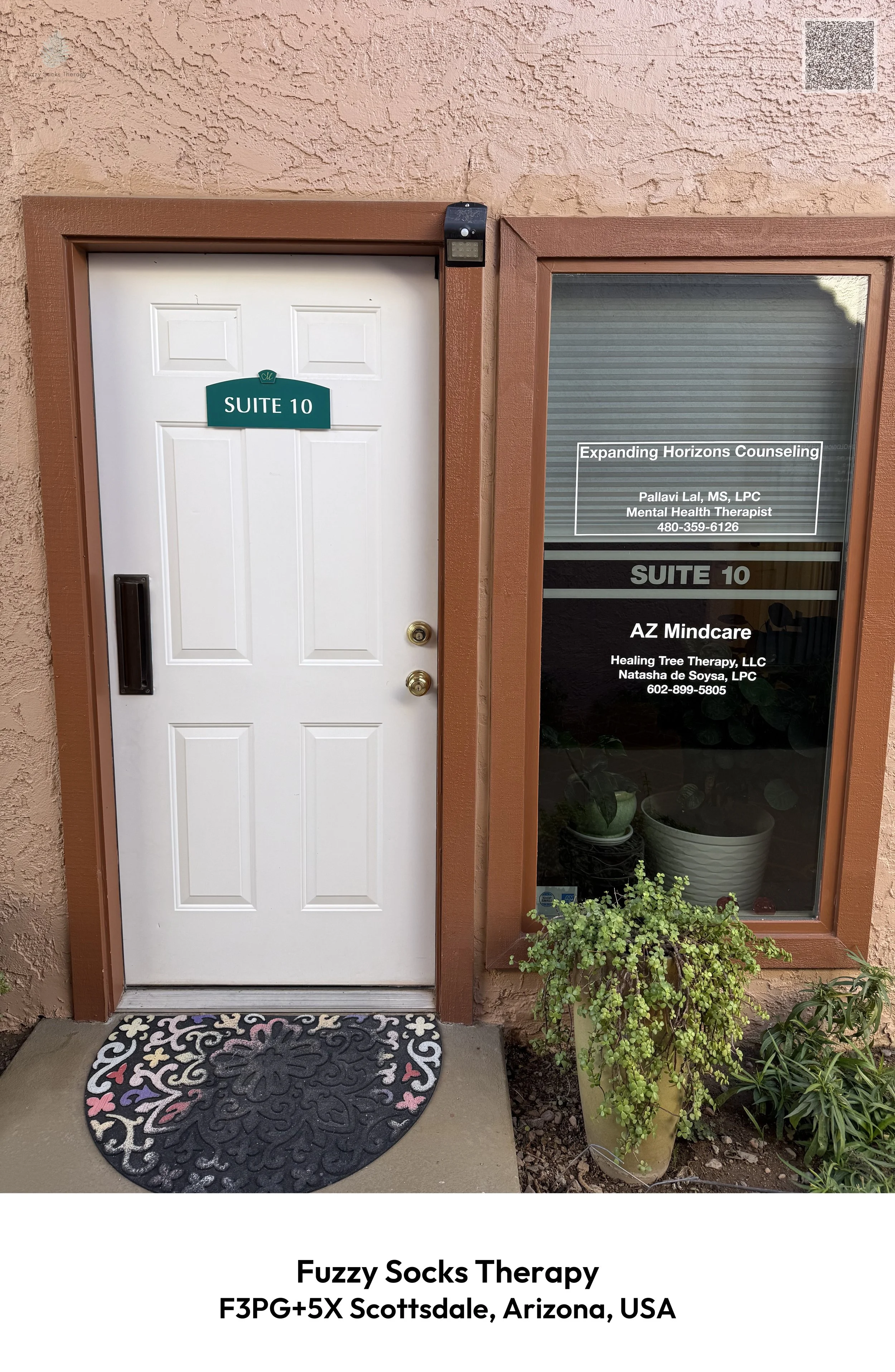
Address: 3295 N. Drinkwater Blvd., Suite 10, Scottsdale, AZ 85251
Phone: (720) 378-8454
Website: https://www.fuzzysockstherapy.com/
Email: [email protected]
Hours:
Monday: 9:00 AM - 5:00 PM
Tuesday: 9:00 AM - 5:00 PM
Wednesday: 9:00 AM - 5:00 PM
Thursday: 9:00 AM - 5:00 PM
Friday: 9:00 AM - 5:00 PM
Saturday: Closed
Sunday: Closed
Open-location code (plus code): F3PG+5X Scottsdale, Arizona, USA
Map/listing URL: https://maps.app.goo.gl/cqhwvXU4UMg6QL1YA
Embed iframe:
The practice offers in-person therapy in Scottsdale along with online sessions for clients in Arizona, Colorado, and Florida.
Clients can explore services such as trauma therapy, EMDR therapy, Deep Brain Reorienting Therapy, neurodivergent therapy, child therapy, couples therapy, discernment counseling, and parenting intensives.
Fuzzy Socks Therapy is especially relevant for people navigating trauma, dysfunctional family dynamics, ADHD, autism, relationship conflict, and emotional overwhelm.
The website presents a direct, practical therapy style focused on real tools and meaningful change rather than vague advice.
Scottsdale clients looking for trauma-informed psychotherapy can find support that combines deeper healing work with concrete skill building.
The practice also offers help for adult children of dysfunctional families, couples on the brink, and neurodivergent kids, teens, and adults.
To get started, call (720) 378-8454 or visit https://www.fuzzysockstherapy.com/ to book a free consultation.
A public Google Maps listing is also available for Scottsdale location reference alongside the official website.
Popular Questions About Fuzzy Socks Therapy
What does Fuzzy Socks Therapy help with?
Fuzzy Socks Therapy helps with trauma, dysfunctional family patterns, neurodivergence, relationship conflict, emotional overwhelm, and related challenges for individuals, couples, and families.
Is Fuzzy Socks Therapy located in Scottsdale, AZ?
Yes. The official website lists the office at 3295 N. Drinkwater Blvd., Suite 10, Scottsdale, AZ 85251.
Does Fuzzy Socks Therapy offer in-person and online sessions?
Yes. The official site says the practice offers in-person therapy in Scottsdale and online therapy in Arizona, Colorado, and Florida.
What therapy approaches are listed on the website?
The website highlights EMDR therapy, Deep Brain Reorienting Therapy, discernment counseling, play therapy, Dialectical Behavior Therapy, Emotionally Focused Therapy, and practical trauma-informed skill building.
Who provides therapy at Fuzzy Socks Therapy?
The official website identifies the therapist as Lianna Purjes.
Does the practice offer couples counseling?
Yes. The website includes couples therapy, couples intensives, and discernment counseling for couples deciding whether to stay together or separate.
Does the practice work with children and adolescents?
Yes. The site says the practice offers child therapy and support for children, adolescents, and their families.
How can I contact Fuzzy Socks Therapy?
Phone: (720) 378-8454
Email: [email protected]
Website: https://www.fuzzysockstherapy.com/
Landmarks Near Scottsdale, AZ
Drinkwater Boulevard is the clearest local reference point for this office and helps nearby clients place the practice in Scottsdale. Visit https://www.fuzzysockstherapy.com/ for service details.
Old Town Scottsdale is a familiar city landmark and a practical reference for people searching for therapy near central Scottsdale. Call (720) 378-8454 to learn more.
Scottsdale Civic Center is another recognizable local landmark that helps define the surrounding area for nearby professional services. The official website has current contact details.
Scottsdale Stadium is a well-known destination in the city and a useful point of reference for local users. Fuzzy Socks Therapy offers both in-person and online sessions.
Indian School Road is a major corridor that helps many residents orient themselves in Scottsdale. More information is available at https://www.fuzzysockstherapy.com/.
Fashion Square and the surrounding central Scottsdale area are widely recognized by local residents and visitors alike. Reach out through the website to book a free consultation.
Downtown Scottsdale is a strong local search reference for people seeking counseling and psychotherapy services in the area. The practice serves Scottsdale in person and multiple states online.
Scottsdale Road is another major route that helps define the broader service area for clients traveling from nearby neighborhoods. The practice supports individuals, couples, and families.
The Scottsdale arts and civic district is a useful area reference for those familiar with the city center. Visit the site to review specialties and next steps.
Central Scottsdale commuter corridors make this practice relevant for nearby residents who want in-person therapy, while online sessions add flexibility for clients in Arizona, Colorado, and Florida.